Exploring Two Decades of Carbohydrate Chemistry
October 18, 2025
In the personal account titled "Development of diverse range of biologically relevant carbohydrate-containing molecules: twenty years of our journey" by Vinod K. Tiwari, published in The Chemical Record (2021), the author reflects on two decades of advancements in synthetic carbohydrate chemistry. This work highlights innovative strategies, including click chemistry, to develop glycohybrids and glycoconjugates with therapeutic potential. As we delve into this literature, we will connect these breakthroughs to the cutting-edge services offered by GlycoCLICK, a platform dedicated to leveraging GlycoCLICK™ technology for carbohydrate-based solutions.
Introduction to the Literature
Vinod K. Tiwari's personal account provides a comprehensive overview of his team's contributions to carbohydrate chemistry over 20 years. The manuscript, spanning 21 pages, emphasizes the role of carbohydrates as new chemical entities (NCEs) in addressing frontline diseases like tuberculosis, diabetes, and viral infections. Tiwari begins by underscoring the uniqueness of carbohydrates—their chirality, hydrophilicity, and bioavailability—which facilitate their use in drug development. The account is structured into sections covering simple glycohybrids, chemoenzymatic synthesis of sialic acid-containing glycans, benzotriazole methodologies, triazole-appended molecules, and glycodendrimers. Each segment illustrates how carbohydrate-based molecules can be tailored for enhanced pharmacological properties.
One of the early highlights is Tiwari's serendipitous discovery in 2002, involving the DBU-mediated isomerization of glucofuranose derivatives. This unexpected reaction led to novel glycosyl amino esters with anti-tubercular activity, setting the stage for further explorations in glycohybrid synthesis.
Key Methodologies and Findings
- Simple Glycohybrids with Chemotherapeutic Potential
The literature details the synthesis of glycosyl olefinic esters, amino alcohols, and ureas as anti-tubercular agents. For instance, glycosyl amino alcohols demonstrated MIC values as low as 1.58 μg/mL against Mycobacterium tuberculosis, outperforming standard drugs like ethambutol. Tiwari's group also developed solid-phase combinatorial synthesis (SPCS) for glycopeptoids and sugar-based ureas, enabling high-throughput screening of bioactive compounds. These approaches underscore the versatility of carbohydrates in creating diverse molecular libraries for drug discovery.
 Fig.1 Carbohydrate derivatives display potent anti-tubercular activity. (Tiwari, 2021)
Fig.1 illustrates some of these derivatives, highlighting their structural diversity and efficacy. The integration of carbohydrates into amides and triazoles—bioisosteres of amides—further enhanced drug-like properties, such as stability and bioavailability.
- Chemoenzymatic Synthesis of Sialic Acid-Containing Glycans
Tiwari collaborates with Prof. Xi Chen to describe one-pot multi-enzyme (OPME) protocols for synthesizing α-2,3- and α-2,6-linked sialosides. These methods use sialic acid aldolases and sialyltransferases to produce glycans for studying protein-carbohydrate interactions. For example, modified sialic acids like 8-O-methyl-Neu5Ac were synthesized and applied in glycan microarrays to probe viral recognition mechanisms. This work has implications for vaccine development and chemical biology.
 Fig.2 Enzymatic synthesis of sialic acid derivatives 36a-c. (Tiwari, 2021)
Fig.2 shows the enzymatic synthesis pathway, emphasizing the efficiency of these methods in generating complex glycans. The ability to tailor sialic acid structures enables precise investigations into biological interactions, aligning with diagnostic and therapeutic applications.
- Benzotriazole Ring Cleavage (BtRC) Methodology
Tiwari's group developed a novel BtRC route for synthesizing benzothiazoles and benzoxazoles from carbohydrate derivatives. Using environmentally benign reagents like polymethylhydrosiloxane (PMHS), this method offers a green alternative to traditional stannane-based reactions. The protocol's utility is demonstrated in creating heterocyclic compounds with potential bioactivity.
- Triazole-Appended Glycohybrids via Click Chemistry
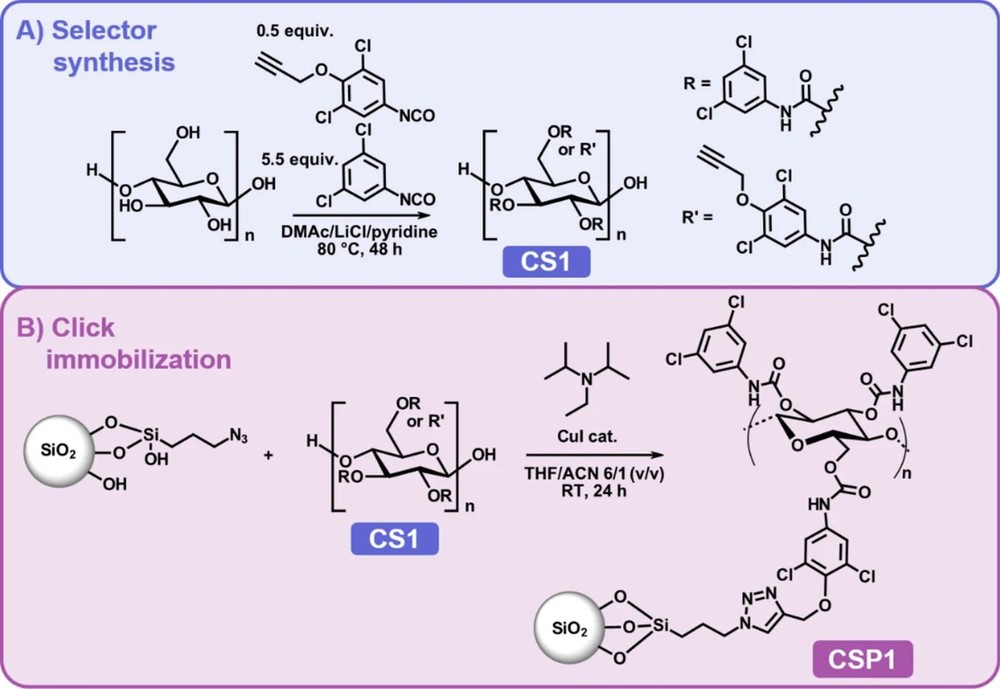
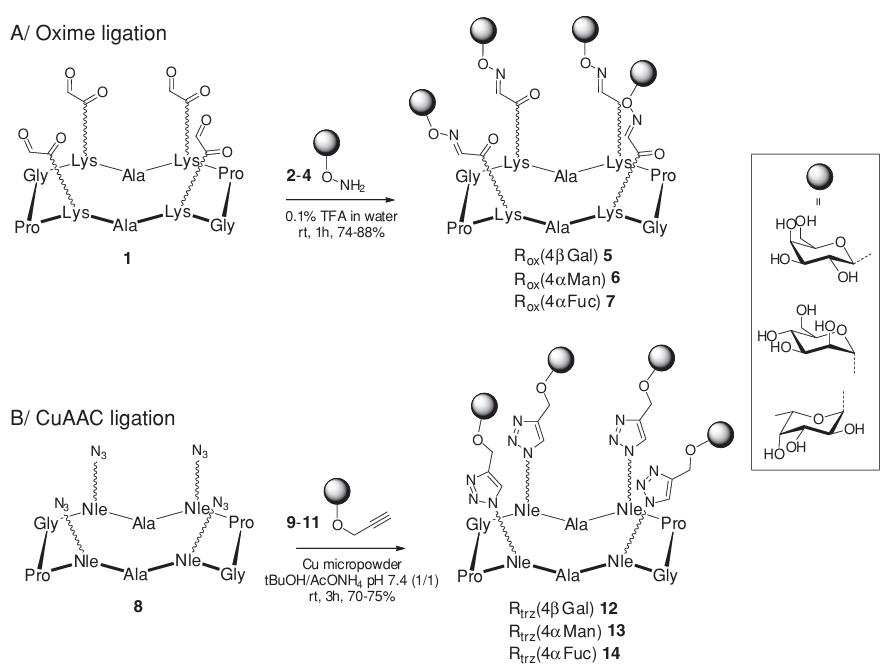
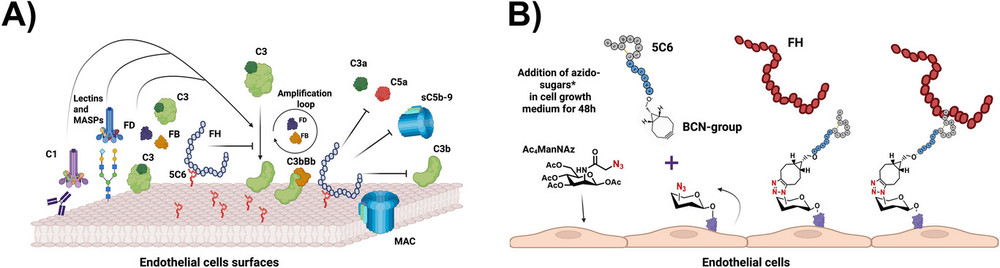
A significant portion of the account focuses on copper-catalyzed azide-alkyne cycloaddition (CuAAC), or click chemistry, for constructing triazole-linked glycoconjugates. Tiwari's team synthesized molecules like noscapine glycoconjugates and curcumin hybrids, which showed improved solubility and antibacterial activity. For instance, a curcumin-triazole glycoconjugate exhibited an 11,000-fold increase in solubility and potent effects against drug-resistant bacteria.
- Glycodendrimers and Dentromers
The account concludes with the synthesis of glycodendrimers using click chemistry. For example, porphyrin-cored dendrimers with 24 glucose units were created for photophysical studies, while calixarene-based systems showed anti-biofilm activity. The "glycoside cluster effect" enhances binding affinity in multivalent systems, making them ideal for drug delivery.
Connection to GlycoCLICK Services
The methodologies described in Tiwari's work align seamlessly with the services offered by GlycoCLICK. For instance:
GlycoCLICK platform provides expert support and advanced facilities, making it an ideal partner for researchers inspired by Tiwari's journey. By utilizing GlycoCLICK™ technology, scientists can accelerate their projects in glycobiology, from synthesis to drug delivery.
Conclusion
Vinod K. Tiwari's personal account exemplifies the transformative potential of carbohydrate chemistry in drug discovery. Through innovative strategies like click chemistry and enzymatic synthesis, his team has developed a diverse range of biologically relevant molecules. These advancements not only address unmet medical needs but also pave the way for future research. For those looking to explore these technologies further, CD BioGlyco offers comprehensive services tailored to carbohydrate-based projects. This literature review underscores the importance of interdisciplinary approaches in advancing glycobiology. By bridging synthetic chemistry with biological applications, Tiwari's contributions continue to inspire the scientific community.
Reference
- Tiwari, V.K. Development of diverse range of biologically relevant carbohydrate-containing molecules: twenty years of our journey. The Chemical Record. 2021, 21(11): 3029-3048.